
Some rescue stories end with a happy dog and a grateful owner. This one ended with a hunter, a cage, and a GPS collar.
It started on an ordinary, bitterly cold Wednesday in February 2019. A small crew of workers was on the job at the Sindi dam on the Pärnu River in southwestern Estonia when they noticed something in the water. An animal was trapped in the ice, barely moving, clearly in trouble.
From where they stood, it looked like a large dog. Maybe a husky that had wandered off. Maybe a stray that had misjudged the ice. Either way, nobody stood around debating it. There was an animal freezing to death in front of them, and they decided to do something about it.
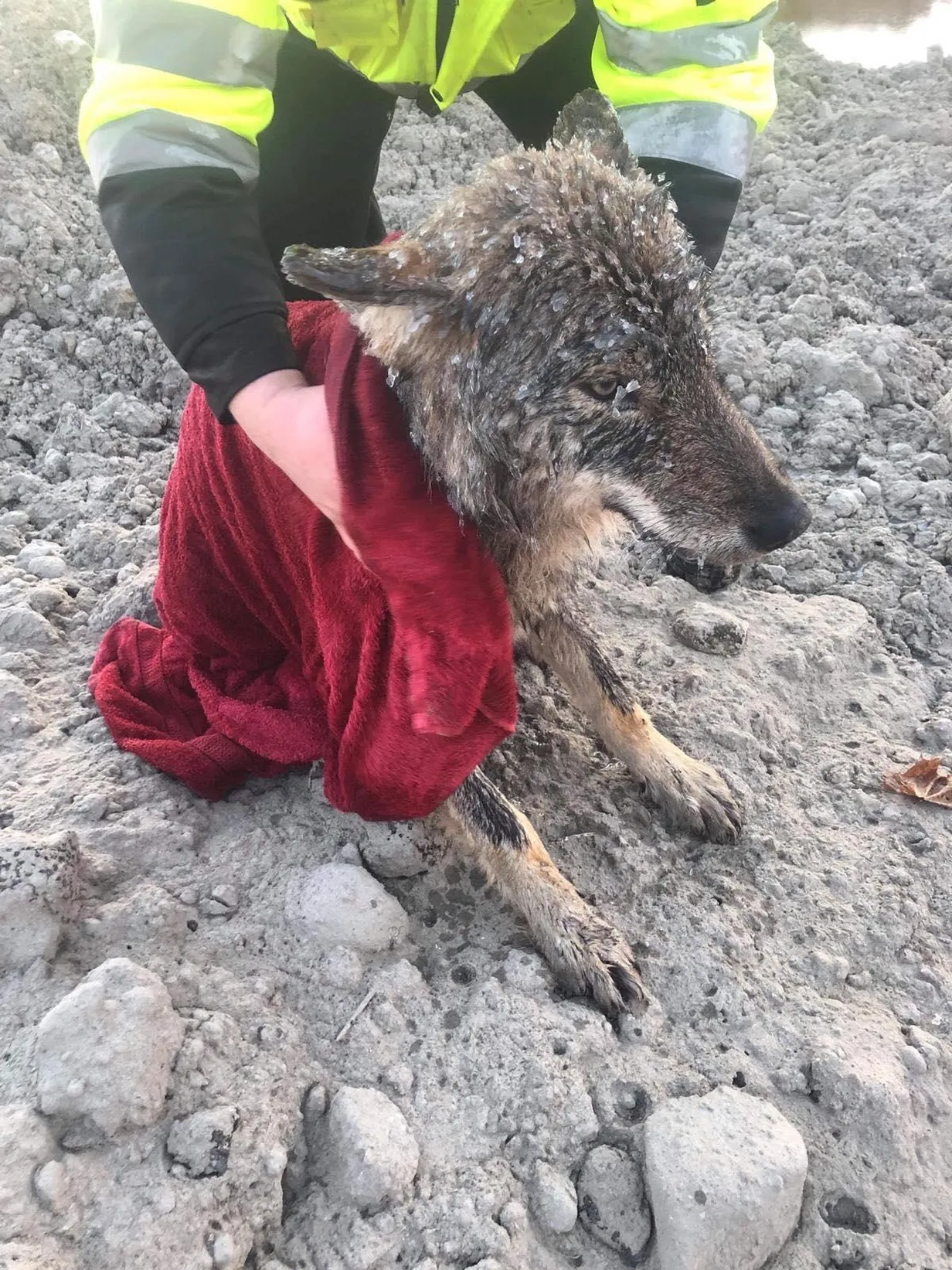
Photo: Erakogu
Breaking Through the Ice
The men cleared a path through the frozen river to reach the animal. By the time they got to it, it was soaked through and coated in ice, too exhausted to fight or flee. They hauled it out and carried it up the riverbank. It was no small job, because the animal was heavy.
Their plan was simple: get it warm, get it to a vet, and hope it wasn’t too late. So they loaded their frozen passenger into the car and set off for an animal clinic.
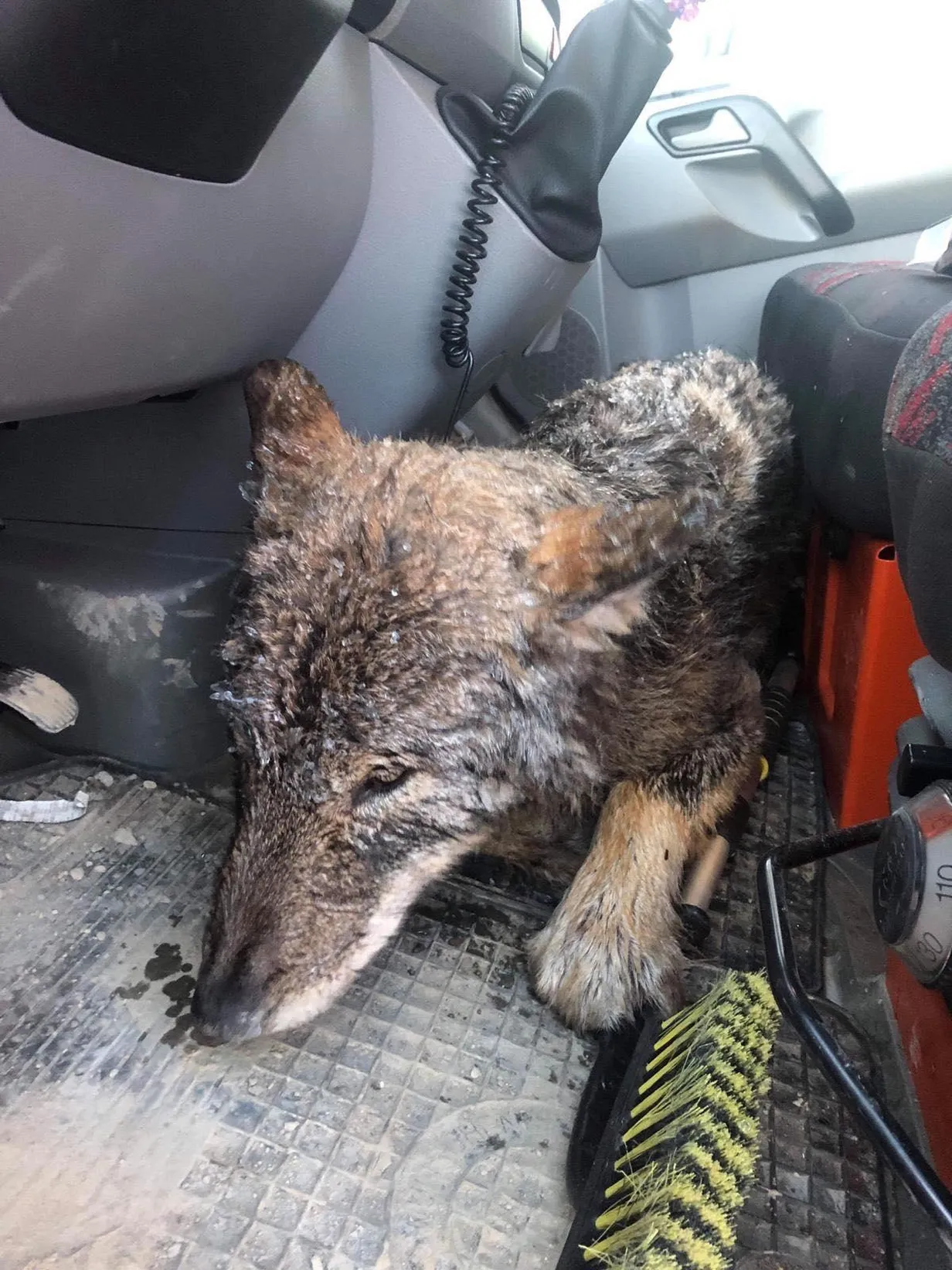
Photo: Erakogu
The Calmest Passenger You’ve Ever Seen
You might expect a half-drowned animal in a stranger’s car to panic, snap, or thrash around. This one did none of that. It settled in, and it went to sleep on one of its rescuers.
Rando Kartsepp, one of the men, described the ride to the Estonian newspaper Postimees:
“He was calm, slept on my legs.”
When Kartsepp shifted to stretch, the animal lifted its head briefly, then went back to resting. It was a peaceful, even sweet scene. It was also, as the men were about to learn, a scene involving an animal that most people would never willingly let near their lap.
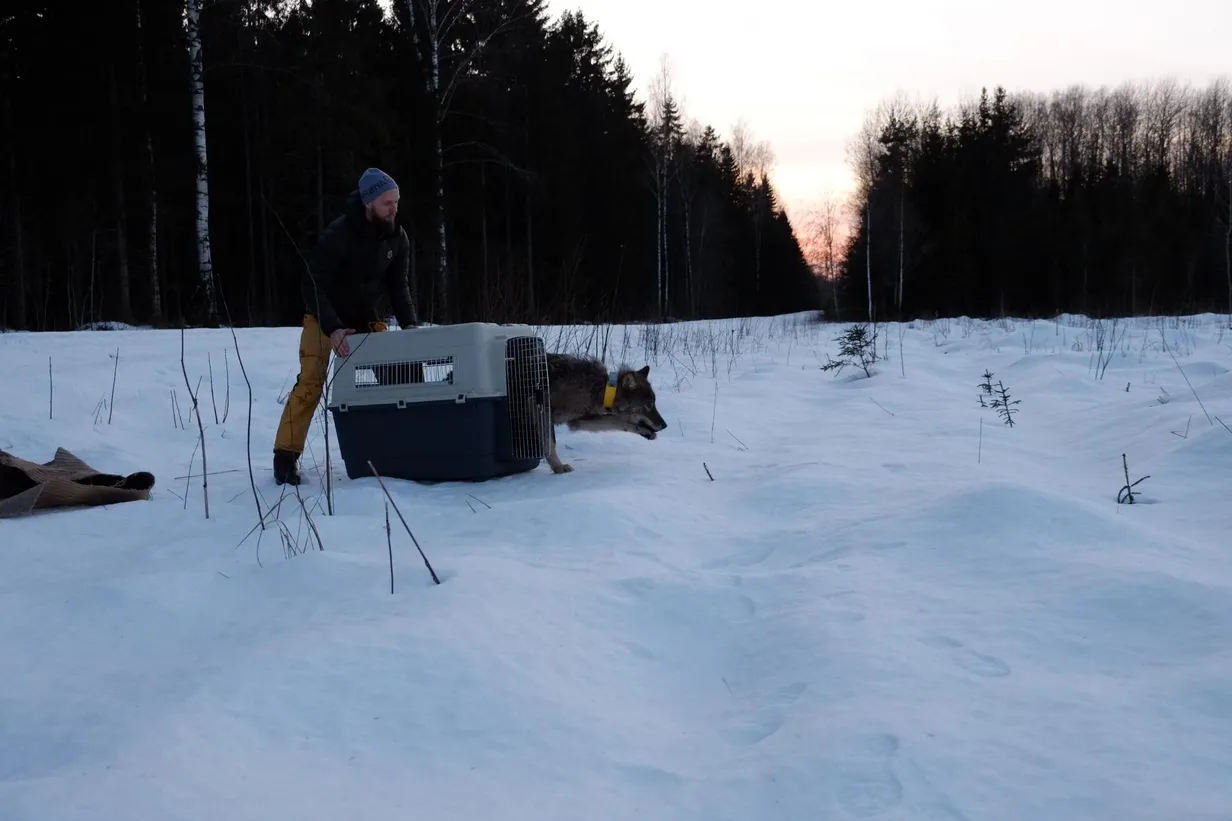
Photo: Marko Kübarsepp
The Vets Start to Wonder
At the clinic, the staff went straight to work. Their patient was in rough shape, and its blood pressure was dangerously low. That turned out to be the key to the whole story. The animal wasn’t calm because it was friendly. It was calm because its body was shutting down from the cold.
As the vets treated it, some of them started to have doubts. This was a very big “dog.” Something about its build and its features didn’t quite fit any breed they could name.
To settle the question, they turned to someone who would know for sure: a local hunter familiar with the wildlife in the area. He took one look and confirmed what the vets had begun to suspect.
The men hadn’t rescued a dog at all. They had rescued a wild wolf, a young male about a year old.
Plan B: The Cage
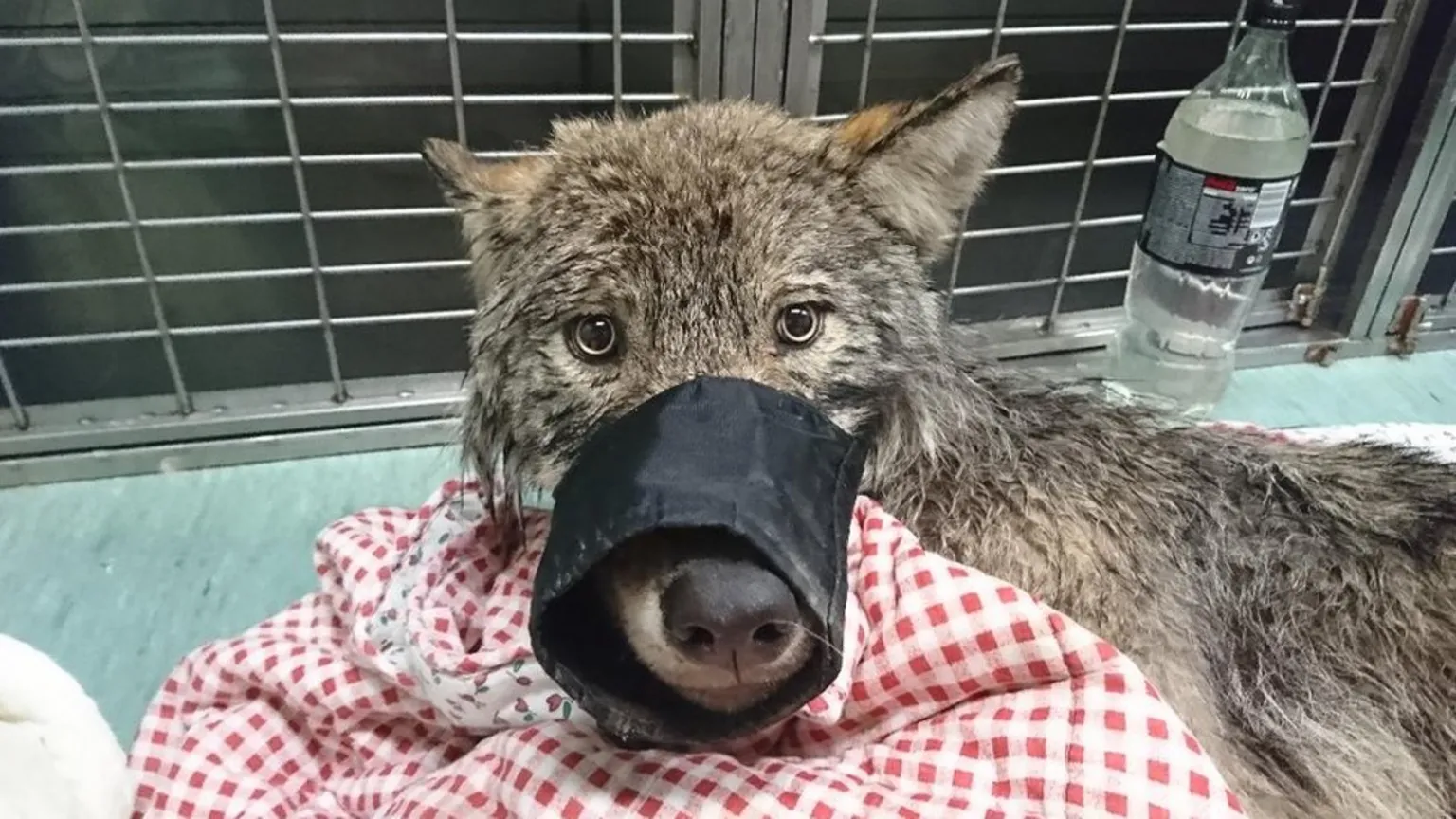
Knowing they had a wild predator on the treatment table changed things a little. The clinic kept caring for the wolf, but once he was stable they moved him into a cage. The logic was sound: a wolf too weak to lift his head is one thing, but a wolf who has warmed up and gotten his strength back is another animal entirely.
The Estonian Union for the Protection of Animals (EUPA) covered the cost of his treatment. The group later thanked everyone involved, singling out the men who pulled him from the river and the clinic staff who were willing to treat a wild animal without hesitating.
Back on His Feet in a Day
Young and tough, the wolf bounced back remarkably fast. Within a day of arriving at the clinic, he had recovered from his brush with death.
Before he left, researchers from Estonia’s national environmental agency fitted him with a GPS collar. Then he was released back into the wild, with a tracking device and a story no other wolf in the forest could match.
The collar wasn’t just a souvenir. According to the BBC, Estonia is home to hundreds of wolves, but only a handful had been collared in recent years. Every tracked animal gives researchers a better picture of how wolves move, hunt, and survive in the country’s forests.

Photo: Erakogu
How Do You Mistake a Wolf for a Dog?
It’s easy to laugh at the mix-up, but put yourself on that riverbank. You see a large, gray, dog-shaped animal struggling in freezing water. You aren’t examining it closely. You’re trying to reach it before it goes under.
Dogs are descended from wolves, and some breeds, like huskies, malamutes, and German shepherd mixes, still look a lot like their wild relatives. A young wolf that is soaked, iced over, and limp from hypothermia looks nothing like the alert, powerful animal you picture from nature documentaries.
If you ever need to tell the two apart, a few features can give a wolf away:
- Longer legs and bigger paws than most dogs of a similar size.
- A narrower chest and a leaner, more streamlined body.
- A longer, broader muzzle and a wider head.
- A straight, bushy tail that usually hangs low instead of curling up over the back.
- Amber or yellow eyes, rather than the brown eyes most dogs have.
None of those details are easy to spot on an animal that is half underwater and covered in ice, so the rescuers deserve some slack.
Why the Wolf Didn’t Fight Back
Wild wolves generally keep their distance from people. Being carried up a slope, bundled into a car, and driven to a clinic would normally be a wolf’s worst nightmare.
This one didn’t resist because it couldn’t. Severe cold slows the heart and drops blood pressure, leaving an animal drowsy, weak, and barely responsive. In a way, the hypothermia that nearly killed him is also what made it possible to save him.
A Word of Caution
This story has a happy ending, but it could easily have gone differently, for the wolf or for the people. If you ever see an animal trapped in icy water, the safest move is usually to call local emergency services or animal rescue rather than going out onto the ice yourself. Ice that can’t hold up an animal often can’t hold up a person either. And as this story shows, the “dog” you’re rescuing may not be a dog at all.
Saving a National Symbol
There’s one more detail that makes this story even better. Not long before the rescue, a group of Estonian nature organizations had chosen the wolf as the country’s national animal.
So without realizing it, a group of Estonian workers pulled their own national symbol out of a frozen river. It then took a nap on one of them on the way to the vet.
The takeaway? When you see an animal in trouble, help it. Just maybe take a second look before you let it fall asleep on your lap.
Feature image source: EUPA