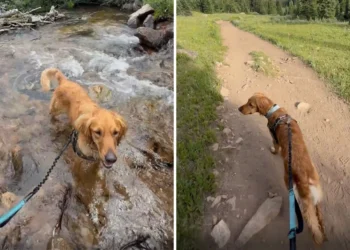


When Charlie disappeared, his family searched everywhere they could think to look.
They eventually found his photograph on the website of a Los Angeles animal shelter. The five-year search for a beloved family pet had not been necessary—Charlie had been missing only a short time.
But by the time the family contacted the shelter, they were told they could not bring him home.
Charlie had already been adopted by someone else.
Charlie Escaped While A Family Member Was Watching Him
Charlie belonged to Bikramjot Padda, who said the dog had been part of his family for approximately five years.
Padda explained that Charlie escaped while his mother was watching him. The family began searching but faced one major problem: Charlie did not have a microchip.
Without permanent identification linked to the family, shelter employees had no immediate way to know that Charlie already had people searching for him.
The family eventually found Charlie’s photograph on the West Valley Animal Shelter website and reached out for help.
Seeing the photograph initially brought relief.
Charlie was alive, and the family finally knew where he had gone.
That relief did not last long.
Charlie Had Already Been Adopted
By December 28, Charlie had reportedly been placed with another family.
Padda said only five days had passed between Charlie arriving at the shelter and being adopted. When he asked about bringing the dog home, he said shelter representatives informed him that he was no longer considered Charlie’s legal owner.
The shelter would not provide the new family’s contact information. Padda also said he was unsure whether officials would pass his information to the people who had adopted Charlie.
For the family, the situation was difficult to accept.
Their dog had not been intentionally surrendered or abandoned. He had escaped, been picked up and placed for adoption before they successfully located him.
However, the shelter had apparently completed its required process and transferred Charlie to a new home.
The Family Was Also Concerned About Charlie’s Health
The dispute was not only about emotional ownership.
Padda said Charlie suffered from seizures and required a special diet. According to him, feeding Charlie human food could trigger a potentially dangerous episode.
That meant the new adopters may have taken home a dog with medical needs they did not fully understand.
Padda feared for Charlie’s health while also dealing with the possibility that the dog he had raised for years might never return home.
Why Couldn’t The Shelter Simply Return Him?
Animal shelters are generally required to hold unidentified stray animals for a specific period before making them available for adoption. The exact length of that holding period depends on state and local law.
The purpose is to give owners an opportunity to find and reclaim their pets while preventing shelters from holding unidentified animals indefinitely.
Once the legal holding period ends and a dog is adopted, recovering the animal can become extremely difficult. The original owner may need to demonstrate that the shelter failed to follow the applicable law or adoption procedure.
That creates an emotionally painful situation.
The original family may view the animal as a loved one who accidentally disappeared. The adopters may have followed every rule, paid the fee and welcomed a dog they believed genuinely needed a home.
The shelter must then balance privacy rules, legal ownership and the interests of both families.
The New Owners Were Contacted
KCAL News contacted Los Angeles Animal Services and asked whether anything could be done.
The department then reached out to the people who had adopted Charlie.
After learning about the situation, the new owners agreed to return him to Padda and his family. A reunion was arranged for that weekend.
The outcome depended on the new family voluntarily stepping aside.
They had apparently adopted Charlie through the proper process and may not have been legally required to give him back. But after learning that Charlie had a family searching for him—and that he had important medical needs—they agreed that he should return home.
Not Every Family Receives The Same Outcome
Hundreds of thousands of lost animals are reunited with their families every year, but the number has recently declined.
Shelter Animals Count estimates that 638,000 dogs and cats were returned to their owners during 2025, approximately 3% fewer than in 2024.
Some owners do not discover where their missing pets were taken until after the holding period expires. In other cases, shelters cannot connect the animal to its family because the pet has no readable tag or registered microchip.
Once another family completes an adoption, the outcome may depend on local law and whether the adopters are willing to return the animal.
Identification Can Prevent The Dispute Before It Begins
The ASPCA recommends using both a personalized identification tag and a registered microchip.
A collar and tag allow a person who finds the dog to contact the family immediately. A microchip provides another form of identification if the collar falls off.
The contact information registered to the microchip must also remain current. A chip connected to an old telephone number or address may not lead shelter workers to the pet’s present family.
Owners should also contact nearby municipal shelters, private shelters, animal-control agencies and veterinary offices as soon as a pet disappears. Visiting shelters in person can be important because descriptions and photographs posted online may not always make a match obvious.
Two Families Could Have Believed Charlie Belonged With Them
Charlie’s original family had cared for him for years and never intended to give him away.
The new family had legally adopted a dog presented to them as available and may have already begun forming a bond with him.
The shelter had rules it was required to follow, but those rules created an outcome that felt impossible to Padda.
In the end, Charlie’s adopters made the decision the original family had been hoping for.
Do you think someone who legally adopts a missing dog should be required to return the animal when the original family appears—or should the adoption remain final once the shelter’s holding period expires?
Sources: KCAL/CBS Los Angeles, the Animal Legal & Historical Center, Shelter Animals Count and the ASPCA.