
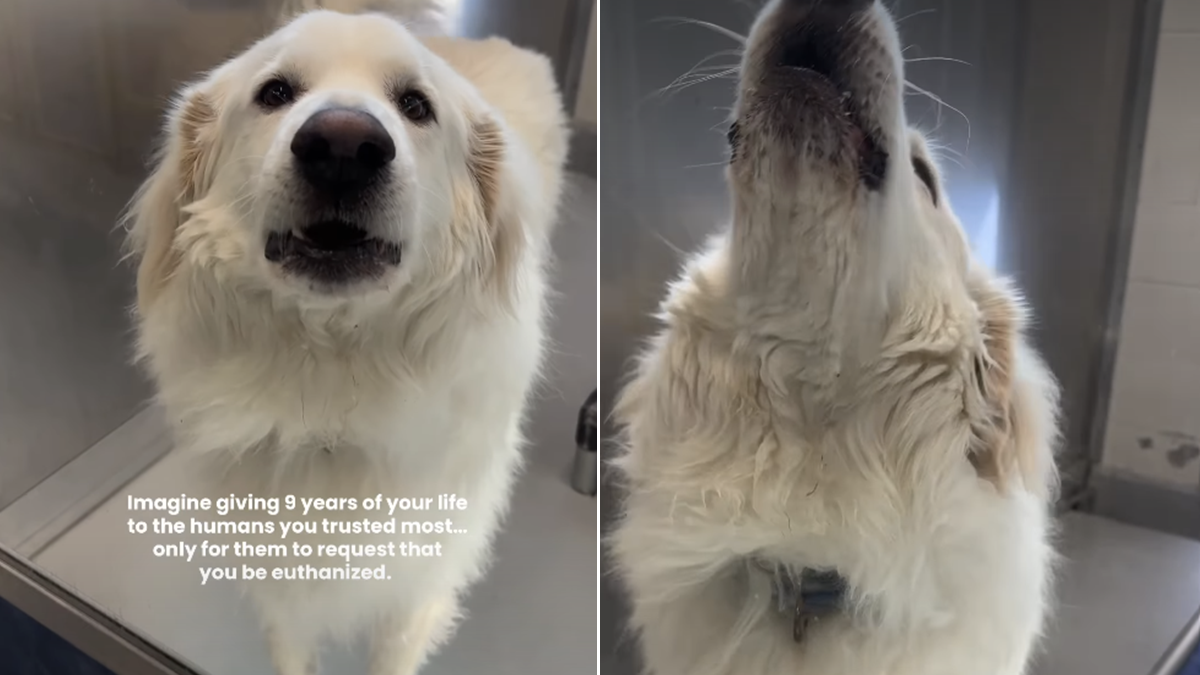
The first words on the video are hard to read: “Surrendered to be euthanized.”
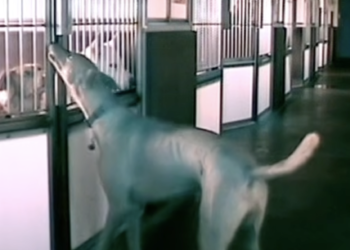
Then the camera finds him. A big, white, 9-year-old Great Pyrenees named Willow, standing quietly by a window in a North Texas shelter. He isn’t lunging, growling, or barking. He simply turns his head and looks toward the camera.
His family brought him in and asked for his life to end. The volunteers who have spent time with him since then say they are seeing a very different dog from the one described on his surrender paperwork.
So who is the real Willow? The answer isn’t as simple as it first looks, and his future may depend on who is willing to find out.
Willow at a Glance
- Name: Willow
- Breed: Great Pyrenees
- Age: 9 years old
- Previous home: An apartment
- Reason for surrender: Reported aggression toward an older daughter and other dogs in the home
- Location: A shelter in North Texas
- Shelter ID: 61797611
- Status: Waiting for a new home
What His Owner Told the Shelter
According to DogTime, Willow’s former owner gave the shelter two reasons for giving him up.
First, they said he had been “nippy,” or aggressive, toward an older daughter in the home. Second, they reported he had shown aggression toward other dogs in the household.
Those are serious concerns, and they deserve to be taken seriously. A family has to feel safe in its own home, and nobody outside that household saw what happened there.
The shelter understood that too. Because staff had no way of independently confirming what went on in Willow’s previous home, volunteers have been careful to keep the owner’s reports separate from what they have personally witnessed.
And what they have witnessed tells a different story.
The Dog the Volunteers Met
Since arriving at the shelter, Willow has calmly let volunteers approach him, pet him, and spend time with him. Those who have worked with him describe him as sweet and friendly.
Two moments in particular caught people’s attention.
The first involved a child. Given that Willow was surrendered partly over reported behavior toward a daughter, this was the interaction everyone was watching most closely. A child recently petted him at the shelter, and he handled it well.
The second involved another dog. A volunteer carried a dog right up close to Willow, the kind of situation that might set off a dog with a real problem around other dogs. Willow didn’t react.
In the video, he is the picture of calm. He stands near the staff, then looks right into the camera, as if waiting to see what happens next.
What We Still Don’t Know
It’s important to be honest here, because Willow deserves the truth more than he deserves hype.
A handful of calm moments in a shelter can’t prove how a dog will behave in every home or every situation. Shelters are unusual environments. Some dogs shut down in them and seem calmer than they really are. Others are more stressed and seem worse than they really are.
We also don’t know what the situations at home looked like. Was there a specific trigger? Was the other dog in the house part of the problem? Was the daughter hurt, or was it a warning? None of that has been shared publicly.
What we do know is this: the people caring for Willow now have firsthand experience that is very different from the dog described at surrender. For a 9-year-old dog whose family asked for him to be put down, that difference could be everything.
What Does “Nippy” Actually Mean?
“Nippy” and “aggressive” get used a lot in surrender paperwork, and they can mean very different things.
View this post on Instagram
Dogs communicate discomfort in stages. Before a dog ever bites, it will usually try quieter signals first: turning its head away, licking its lips, freezing, showing the whites of its eyes, or walking off. If those signals are missed, a dog may escalate to a stare, a growl, a lifted lip, or an air snap.
A “nip” is often one of the last warnings before a real bite. It’s a dog saying, as clearly as it can, that it’s uncomfortable and needs space.
That doesn’t make a nip okay, especially around kids. But it’s very different from a dog that attacks without warning. Many dogs who nip in a specific situation, like being hugged, disturbed while sleeping, or bumped while eating, do perfectly well once people learn to read them and avoid those triggers.
Without more details, there’s no way to know which category Willow falls into. But it’s one reason experienced rescuers rarely take a single word on a form as the final verdict on a dog.
Understanding the Great Pyrenees
To understand Willow, it helps to understand where his breed comes from.
Great Pyrenees were bred in the mountains between France and Spain to guard flocks of sheep from wolves and bears. For centuries, they worked largely on their own, often without a human nearby, deciding for themselves what counted as a threat.
That history shows up in the breed today:
- They’re independent thinkers. Pyrenees were built to make decisions, not to wait for commands. That can make them seem stubborn.
- They’re protective. Guarding is in their DNA, and they may take their “flock” and their space seriously.
- They’re watchful and vocal. Many bark at night, when predators would traditionally be most active.
- They’re huge. Males often weigh 100 pounds or more. A warning from a dog that size can feel far more alarming than the same behavior from a small dog.
- They’re famously gentle with their own. Well-matched Pyrenees are known for being calm, patient, and devoted to their families.
Put a giant, independent, protective guardian dog in an apartment with another dog and a busy household, and it’s easy to see how friction could build, even for a dog who is gentle at heart.
Why Age Might Matter
At 9, Willow is a senior. Giant breeds age faster than small dogs, and the Great Pyrenees typically lives around 10 to 12 years.
Older dogs often live with aches and pains their families never notice. Arthritis, sore hips, dental pain, and other health problems can make a dog touchy about being bumped, handled, or crowded, and a dog in pain may snap in situations that never bothered it before.
There’s no information suggesting that’s what happened with Willow. But it’s the reason vets often recommend a full checkup whenever an older dog’s behavior changes, and it’s one of the first things a thoughtful adopter could look into.
What Happens When a Dog Is Surrendered
When families bring a pet to a shelter, they are usually asked why they’re giving the animal up. Some owners, especially with older dogs or dogs they believe are dangerous, ask that the animal be euthanized.
Policies vary widely from shelter to shelter. Many shelters evaluate the animal themselves before making any decision, and volunteers and staff often push hard to give dogs a chance when what they see doesn’t match what they were told.
That’s what is happening with Willow. Rather than let the surrender note be the last word on his life, the people caring for him are sharing what they’ve seen and asking the public for help.
Why Senior Dogs Like Willow Are at Risk
Willow faces a harder road than most shelter dogs, and not only because of the reports that came with him.
Senior dogs are routinely passed over. In the first half of 2025, senior dog adoptions dipped 2% compared to the year before, while adoptions of young dogs rose 6%, according to Shelter Animals Count data shared by the PEDIGREE Foundation.
Many adopters walk right past the gray muzzles on their way to the puppies. Add a giant breed and a surrender note mentioning aggression, and a dog like Willow can easily be overlooked until time runs out.
That’s exactly why his story is being shared.
Why Adopting a Senior Dog Can Be the Best Decision You Make
People who adopt older dogs often say they’d never go back to puppies. Here’s why:
- What you see is what you get. An adult dog’s size and personality are already set.
- Calmer energy. Senior dogs are often happy with a walk, a meal, and a long nap.
- Less chaos. No teething, no chewed shoes, and usually far less training from scratch.
- Deep gratitude. Many owners say their senior rescues bond fast and hard, as if they know they’ve been given a second chance.
The Right Home for Willow
Willow doesn’t need a perfect home. He needs the right one.
Based on what’s known so far, that likely looks like:
- Someone who knows big dogs. Experience with Great Pyrenees or other guardian breeds would be a real plus.
- A calm household. Adults or older, dog-savvy kids, at least while he settles in.
- Careful introductions to other pets. Or a home where he can be the only dog while everyone gets to know him.
- An early vet visit. A senior checkup can rule out pain or health problems that may have played a part.
- Time and space to decompress. Many rescue dogs need weeks, sometimes months, to show who they really are.
- Room to be a Pyr. A yard or regular outdoor time suits the breed far better than a cramped space.
In return, a family would get what senior dogs do best: a calmer, gentler companion who is grateful for a soft bed and a place to belong.
Your Questions About Willow, Answered
Is Willow still available?
As of the latest reports, Willow is still waiting for a new home. Check the volunteer’s Instagram post for current updates.
Is Willow safe around kids?
Volunteers report that a child petted him at the shelter and he handled it well. His previous owner reported problems with an older daughter. A home with adults or older, dog-savvy children would be the safest place to start.
Can Willow live with other dogs?
He didn’t react when a volunteer carried another dog close to him, but his former owner reported aggression toward dogs in the home. Slow, supervised introductions, or a home as the only dog, would be wise.
Where is he?
At a shelter in North Texas. His shelter ID is 61797611.
What if I can’t adopt?
Share his story. Tag friends in North Texas, or send it to Great Pyrenees rescue groups. Visibility is often what saves dogs like Willow.
How to Help Willow
Willow’s story was shared by Sasha, a North Texas shelter volunteer, in a video on Instagram (@sashapawstx). If you’re in the area and could give him a home, or know a Great Pyrenees rescue that might be able to take him, reach out through the volunteer’s post.
Every share puts him in front of someone new. It only takes one right person.
Willow spent nine years with a family that, in the end, asked for his life to be over. He deserves a few more good years with people who are ready to meet the dog the volunteers see: calm, gentle, and still waiting by the window.