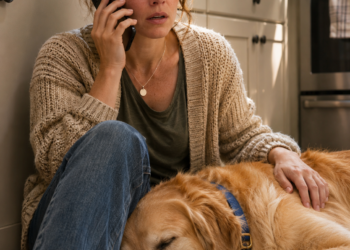

The woman from the animal shelter didn’t ask whether my new dog was eating or sleeping well.
She asked whether I had locked my front door.
I was standing in the kitchen, rinsing Otis’s dinner bowl. He was stretched across the rug behind me, an eleven-year-old golden retriever with a silver muzzle, one white front paw, and the exhausted expression of a dog who had spent too long waiting for someone to choose him.
“Why?” I asked.
“Because the man who surrendered him has been here twice,” the woman said. “He’s demanding to know who adopted him. And Claire, there’s something we only just learned.”
I looked down at Otis. His tail made one slow sweep against the floor.
“The man who brought him here,” she continued, “wasn’t his owner.”
I felt my fingers tighten around the edge of the sink.
“He signed the surrender papers,” I said. “You told me that when I adopted him.”
“I know. We made a mistake. Please don’t give Otis to anyone who comes looking for him. If that man contacts you, call us first.”
For seventeen days, I had believed I’d given an unwanted dog a home.
Now someone was trying to take him away—and the person who might have the strongest claim to him was someone I’d never even heard of.
The Dog at the Back of the Shelter
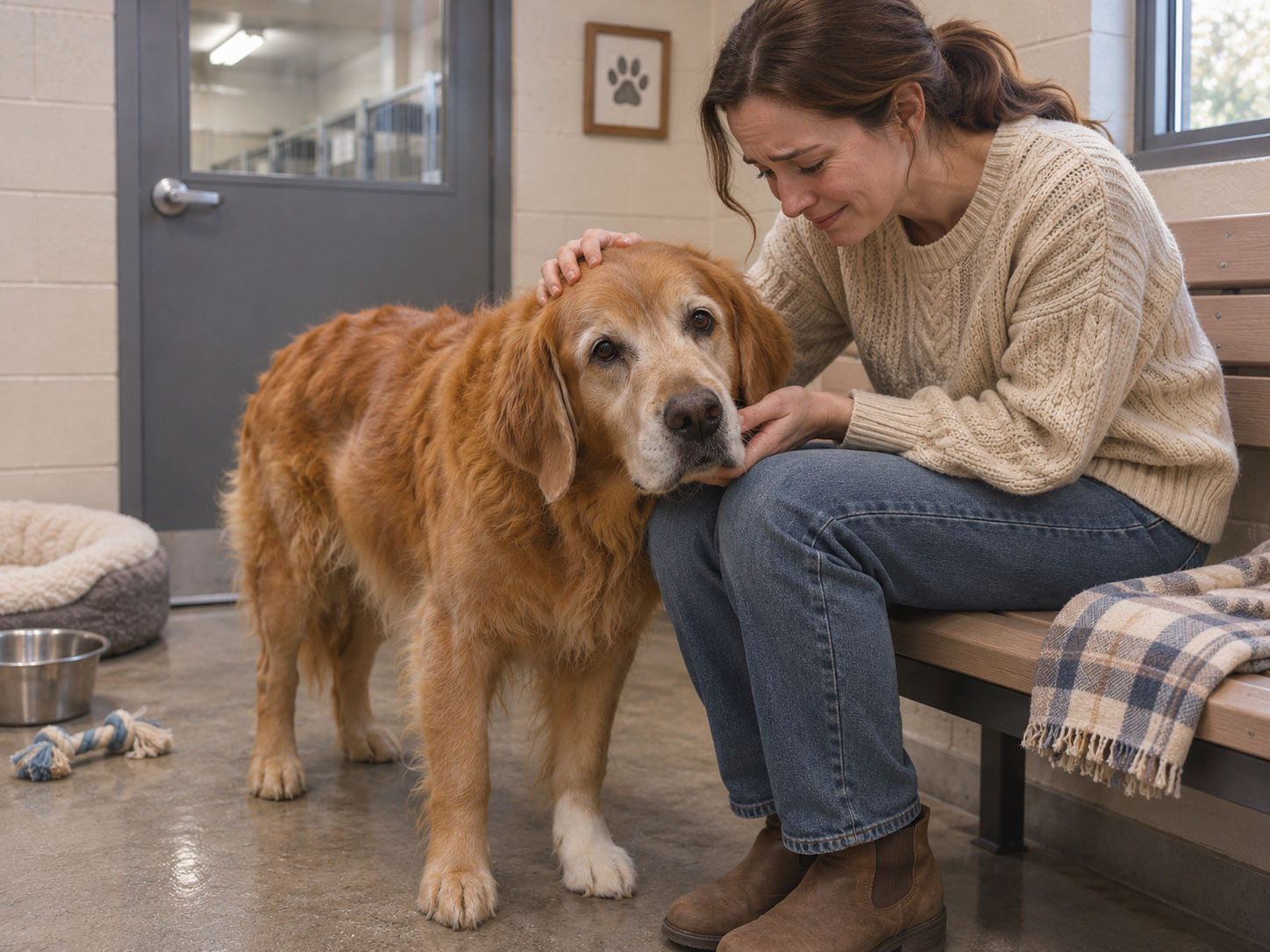
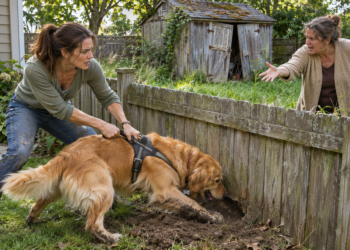
Image source: Openai(For illustrative purposes)
I hadn’t gone to Ridgeway Animal Shelter looking for a senior dog.
After a divorce and six months of pretending I liked living alone, I was ready for a dog again.
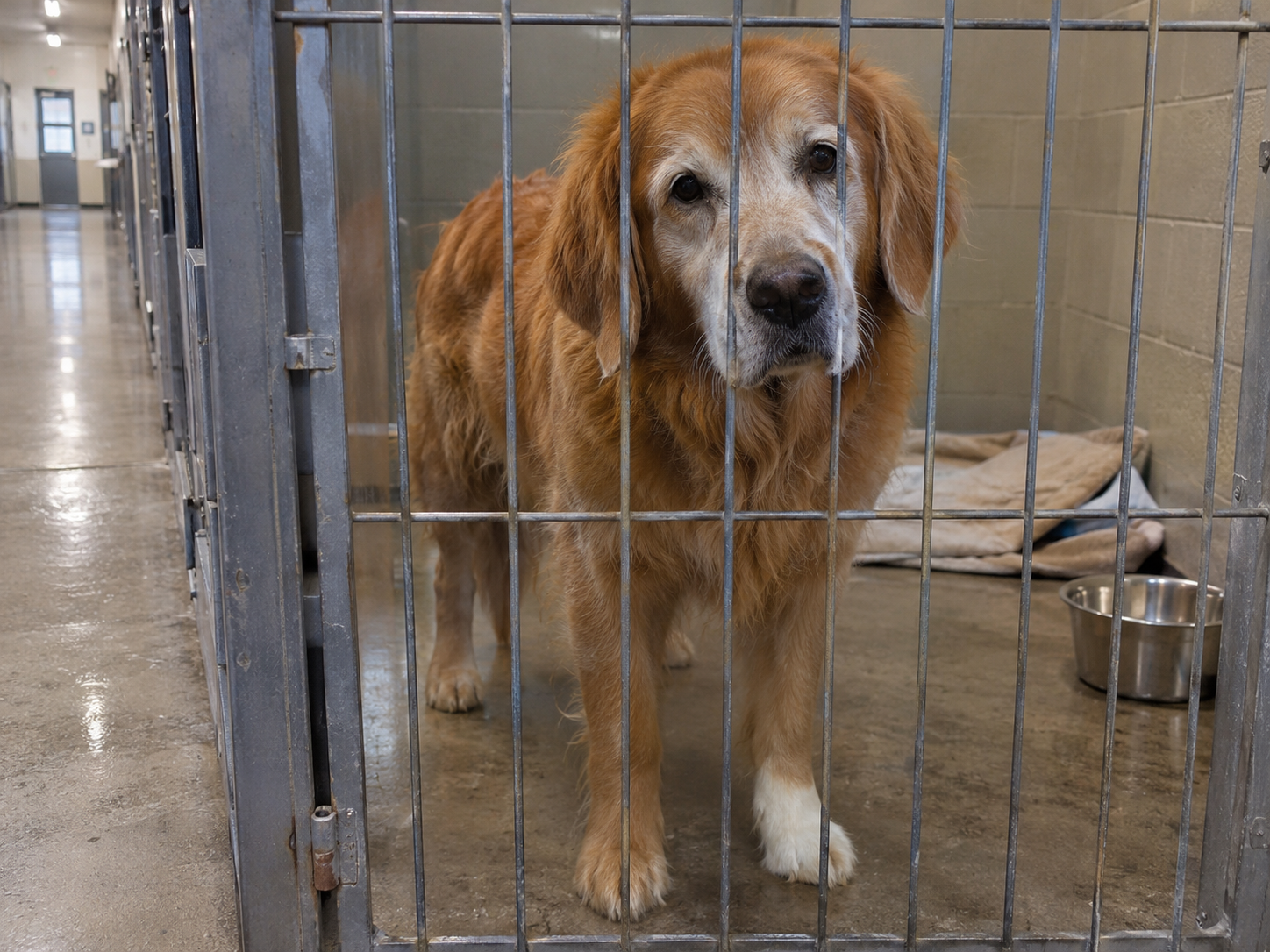
The adoption counselor, Elena Ramirez, walked me past a row of kennels full of barking, bouncing dogs. At the very end was Otis.
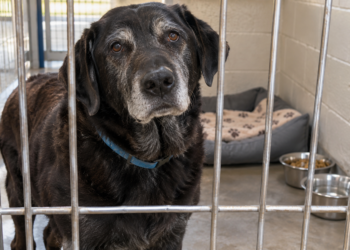
He didn’t bark. He didn’t leap at the gate. He lifted his head from a flattened blanket, considered me for a moment, and rested his chin back on his paws.
“How long has he been here?” I asked.
“One hundred and forty-two days.”
I thought I’d misheard her.
“Almost five months?”
Elena nodded. “Older dogs have a harder time. He’s also nervous with unfamiliar people. He doesn’t do anything aggressive. He just shuts down.”
His kennel card listed him as a golden retriever mix, approximately eleven years old. Under Reason for surrender, someone had typed: Owner no longer able to provide care.
Under Behavioral notes were three lines: Withdrawn. Reluctant to walk on leash. May refuse food in unfamiliar settings.
People passed him over because he didn’t perform happiness. Nobody wanted to wait for an older dog to trust them.
I sat on a bench in the little visiting room. Otis stood by the door for almost ten minutes, looking as if he expected someone to come through it. Finally, he crossed the room and sat beside my knees.
I didn’t reach for him. I just waited.
After a while, he leaned the side of his head against my leg. It was the smallest gesture, but I could feel how carefully he had decided to make it.
“I’d like to take him home,” I told Elena.
She looked startled, then smiled.
Seventeen Days of Small Victories
I bought Otis a thick bed, a stainless-steel bowl, and a bright green leash. I put the bed in the living room, but he chose the patch of kitchen floor beside the back door.
For the first three nights, he barely slept. Every time a car slowed outside, his ears went up. If footsteps sounded on the sidewalk, he stood and waited.
I assumed he was frightened by all the unfamiliar noises.
By the fifth day, he started following me from room to room. By the eighth, he ate without waiting for me to step away. On the twelfth, he brought me a faded stuffed rabbit I’d bought him and dropped it beside my foot.
Every step felt enormous.
He wasn’t the dog I’d imagined adopting. He didn’t race to the door when I picked up the leash. He didn’t know what to do with a tennis ball. He walked slowly and stopped to stare at every older man wearing a baseball cap.
But he had a way of putting his head against my hand just when I was about to close my laptop for the night. And once he began sleeping soundly, he snored so loudly I could hear him from the bedroom.
I sent my sister a photograph of him asleep beneath the kitchen window.
He finally looks comfortable, she wrote.
I had signed an adoption agreement, paid the fee, and scheduled a veterinary appointment. Elena had explained that the dog had been surrendered by a relative who said he couldn’t keep him. Nothing suggested an ownership dispute.
Then came the call about my front door.
The Man Who Had Been Asking Questions
I called Elena back after moving Otis into the living room, away from the conversation I knew he couldn’t understand but didn’t want him hearing in my frightened voice.
She told me a man named Grant Mercer had brought Otis to the shelter almost five months earlier. Grant had signed the surrender form and supplied a document showing that he managed his mother’s financial affairs.
“He told us she couldn’t care for the dog anymore,” Elena said. “Our intake team believed he had permission to surrender him.”
Now Grant was back.
The day after my adoption, he’d called to ask whether Otis was still there. When staff told him the dog had been placed, he became angry. The next week, he visited in person and demanded the new owner’s address.
Elena refused to share it. He returned again, insisting that Otis was family property and the shelter had no right to adopt him out.
“But he surrendered him,” I said.
“Exactly. That’s why we reviewed the file.”
The staff had found that the authority document Grant provided related to paying bills and managing accounts. It did not clearly authorize him to give away someone else’s dog. Worse, the contact information in Otis’s old veterinary paperwork belonged to a woman named Evelyn Mercer—not Grant.
“Is Evelyn his mother?” I asked.
“Yes. We’re trying to verify everything directly with her. Until we do, we’re treating this as a disputed surrender, and we’ve notified the appropriate local authorities.”
I swallowed.
“Is he going to come here?”
“We have not given him your information. But we don’t know what he already knows. I wanted you warned.”
Elena apologized. The shelter would review the adoption and help resolve the dispute; I didn’t have to face it alone.
Still, I spent the next hour checking the lock and wondering what hid behind three words on Otis’s file: unable to provide care.
The Visitor on My Porch
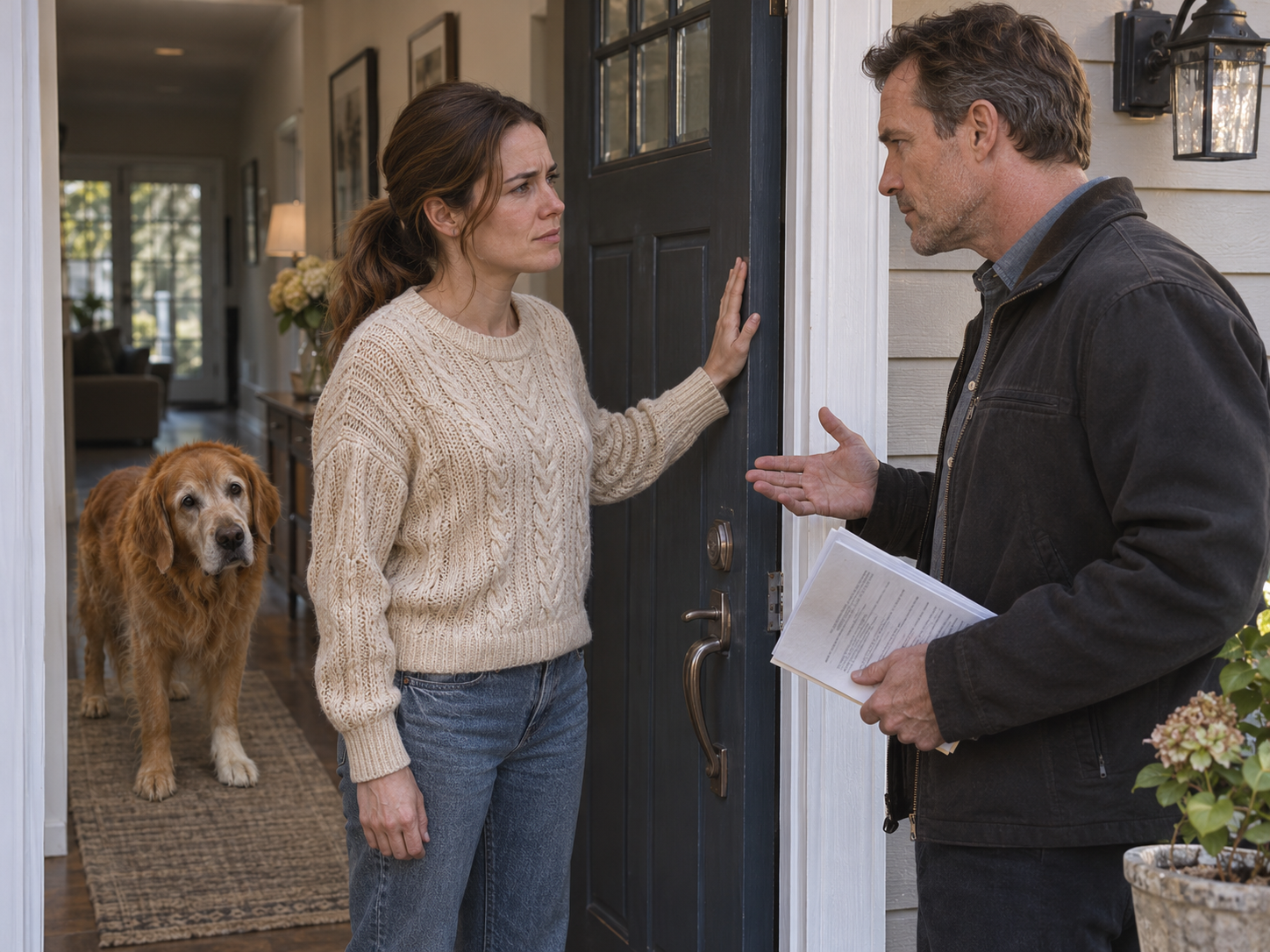
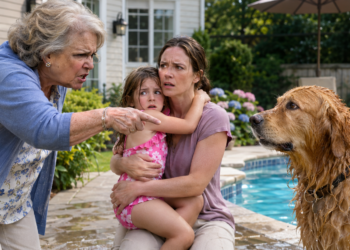
Image source: Openai(For illustrative purposes)
Three evenings later, my doorbell camera lit up while I was making dinner.
A man in a dark jacket stood on the porch. He looked about fifty. He held a thick envelope in one hand and kept glancing toward my front window.
Otis had been asleep by the kitchen door. At the sound of the bell, he rose slowly and walked into the hallway.
When he saw the man through the narrow glass panel beside my door, he stopped.
Not a bark. Not a growl.
He backed away until his hip touched the wall.
I spoke through the camera instead of opening the door.
“Can I help you?”
“I’m Grant Mercer,” the man said. “I know you have my dog.”
My pulse jumped. “How did you get this address?”
“You posted his picture on the neighborhood page. Your house number was behind him.”
I wished I had never posted it.
“I don’t want trouble,” he added. “I just want Otis back.”
“You surrendered him to the shelter.”
“That was a misunderstanding.” He lifted the envelope. “I have documents.”
I could see Otis down the hall. His ears were flat, and he had gone perfectly still.
“Any dispute needs to go through the shelter,” I said. “You can’t take him from my home.”
Grant pressed his lips together. “You don’t understand. My mother was very attached to that dog.”
“Then why did you surrender him?”
He looked toward the street. “She passed away. I didn’t know what else to do.”
For a moment, I almost felt sorry for him.
Then he said, “He has no business being with strangers. He’s the last thing I have left of her.”
Something about it sounded rehearsed.
I told him again to contact Elena. He left the envelope beneath the welcome mat and drove away.
Inside were copies of the same surrender form I had seen during the adoption. His signature was at the bottom, black ink on white paper.
I photographed the papers, saved the doorbell recording, and called the shelter.
Elena listened without interrupting. Then she asked me to repeat one sentence.
“He told you his mother passed away?”
“Yes.”
She was silent for several seconds.
“Claire,” she said, “we have reason to believe that’s not true.”
The Woman Who Wasn’t Gone
The next morning Elena called with an update. With help from the old veterinary clinic, the shelter had reached Evelyn Mercer through the care facility where she was recovering from a serious fall.
She was alive.
She had been alive the day Grant brought Otis to the shelter, and every day since.
“She says she never agreed to surrender him,” Elena told me. “She’s asked to speak with whoever is caring for him.”
I sat down before my knees could decide for me.
“Does she want him back?”
“We haven’t discussed that yet. She wanted to know whether he was safe.”
The shelter arranged a telephone call with Evelyn, with her permission. She sounded older and tired, but there was no confusion in her voice when she asked about Otis.
“Is he eating?” was her first question.
“Yes,” I said. “Very well, actually.”
“Does he still put his foot in the water bowl?”
I looked toward the kitchen. Otis’s front paws were damp. One of them was resting squarely in the dish.
I laughed, then began crying so abruptly I had to cover my mouth.
“He does.”
Evelyn made a small sound, as if she’d been holding her breath for months and could finally let it out.
“I thought he was dead,” she said.
Grant had told her Otis became ill after she entered rehabilitation and couldn’t be saved. She’d asked for his collar; he told her it had been thrown away.
Otis hadn’t died. He’d spent nearly five months waiting in a concrete kennel.
Evelyn asked if she could see him. I said yes immediately, then added that we’d arrange it through the shelter so everyone knew what was happening.
I wanted to protect Otis. I also knew I couldn’t pretend the woman on the other end of the phone didn’t have a claim to him simply because I loved him now.
There was one more thing I needed to know.
“Did you know he was going to be given away?”
“No,” she said. “I told Grant to make sure he was looked after until I could come home.”
Her voice broke on the last two words.
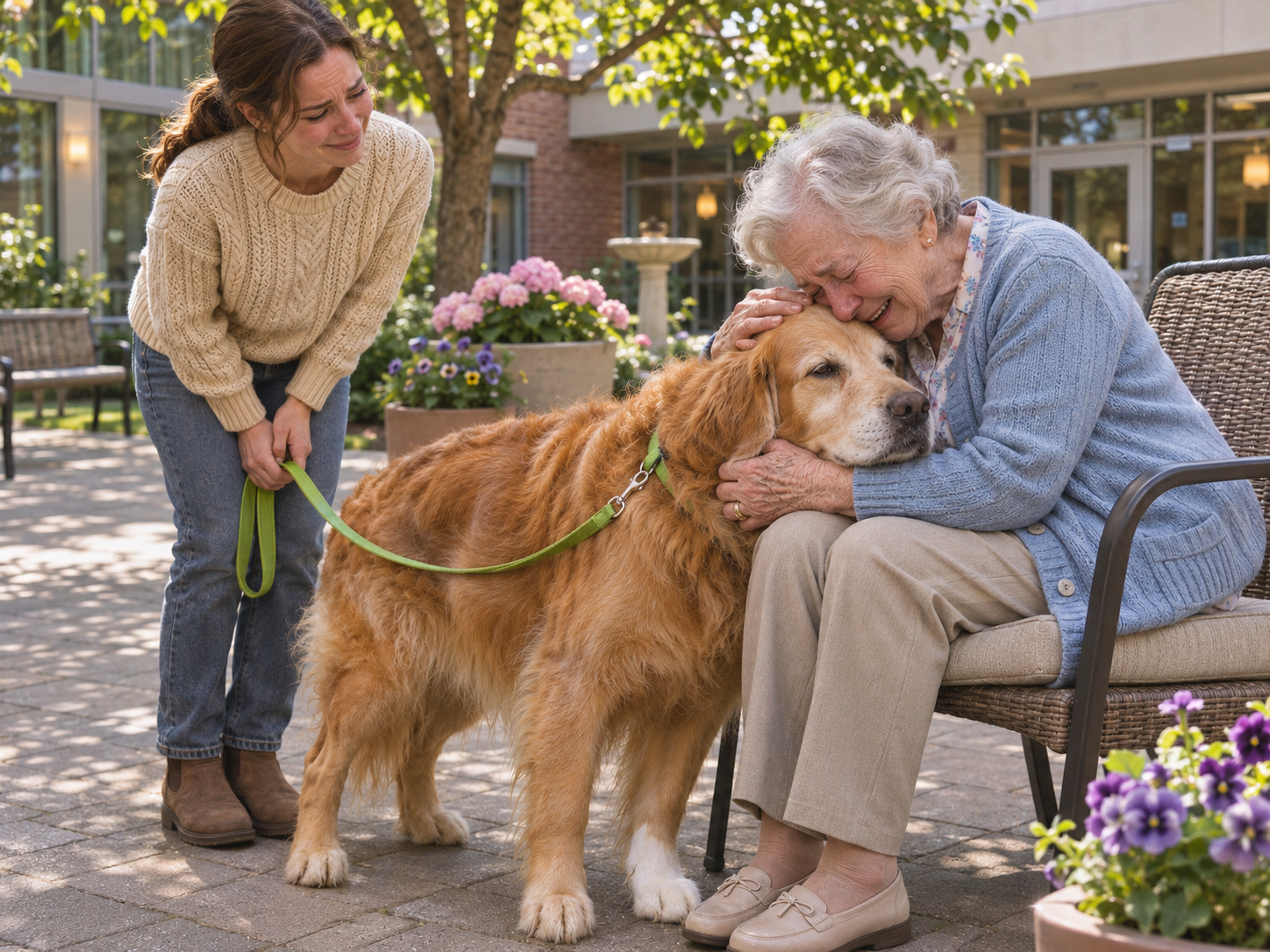
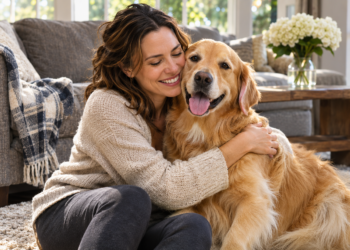
Image source: Openai(For illustrative purposes)
The Visit
Evelyn was eighty-one, with close-cropped white hair and a pale blue sweater buttoned to the throat. When I arrived at the care facility, she was sitting in a wheelchair beside the courtyard doors, a folded yellow blanket on her lap.
A staff member led us to a quiet garden. Elena came too.
Otis walked at my side on his green leash. He was moving at his usual unhurried pace until we reached the courtyard.
Evelyn said one word.
“Otie.”
The dog stopped.
His head lifted. He pulled gently toward the voice, then more urgently, until we reached her chair. Evelyn lowered both hands and Otis pressed his whole body against her knees.
He made a low, trembling sound I had never heard from him.
She buried her fingers in his fur. “I kept waiting for you,” she whispered. “Oh, darling, I kept waiting.”
For five minutes, none of us tried to speak.
Otis leaned against her as if he had finally found the one place he remembered how to rest. Evelyn rubbed the white paw that had made me notice him in the shelter. She knew an old scar under his fur, a sensitive ear, the way he preferred his left side scratched.
I knew then that she hadn’t simply owned this dog. They’d had a life together.
Before her fall, she’d lived with Otis in a white house with a vegetable garden. They walked the same three blocks each morning. He was her last companion from the years when her husband was alive.
When Evelyn was hospitalized, Grant had offered to handle things at the house. She’d trusted him because he was her son.
As she spoke, Otis kept one paw on her shoe.
I had never seen him so awake.
What the Papers Did—and Didn’t—Say
After the visit, Elena explained what the shelter had established and what still needed to be resolved.
Grant had been helping Evelyn with finances since her fall. He had access to accounts to pay medical bills and maintain her home. But having permission to handle bills did not automatically give him permission to dispose of her personal belongings, including Otis. The paperwork he had shown the shelter was not the simple proof of ownership the intake staff had treated it as.
Evelyn said she’d never authorized the surrender. His microchip and veterinary history supported her claim, though any legal dispute required proper review.
I asked why Grant would suddenly want a dog he’d abandoned almost five months earlier.
Evelyn stared at the courtyard wall.
“He’s been telling me I can’t go home,” she said.
She was still receiving therapy, but the care team had discussed the possibility of moving to a smaller apartment with some daily support. Grant wanted her to remain in residential care permanently. He had also started clearing her house and talking to an agent about selling it.
Evelyn hadn’t agreed to a sale. She said she’d asked to review every decision before anything was signed.
Then she looked at Otis.
“He told me there was nothing left there for me,” she said.
Grant hadn’t simply found Otis a temporary home. He’d taken away one of Evelyn’s reasons to imagine a life beyond the facility.
Elena was careful not to promise what would happen next. She said the shelter would correct its records, document the disputed surrender, and cooperate with anyone reviewing it. Evelyn could also get independent legal advice about her property and finances.
A social worker at the facility offered to help her contact an advocate. With Evelyn’s consent, they also made a report about possible financial exploitation to the appropriate adult-protection agency.
The house was still in limbo. Evelyn still needed care. And Otis’s future was more complicated than ever.
The Call From Her Son
Grant called me two days later. I didn’t answer at first, but he left a message asking me to speak with him “before this gets blown out of proportion.”
I returned the call with Elena present on speakerphone.
He began by saying that his mother wasn’t capable of caring for an old dog.
“She fell in that house,” he said. “Nobody understands how bad it was. I was trying to make things easier.”
“Then why tell her Otis died?” I asked.
He exhaled sharply. “Because she would have insisted on keeping him. She’d have refused rehab if she knew he was at a shelter.”
“So you let her grieve him?”
“I didn’t know he’d sit there for months.”
He sounded angry, and frightened of being questioned.
I asked why he’d come to my house demanding Otis back.
“Mom kept talking about him. I thought if I could get him, I could put him somewhere else before she started asking questions.”
For the first time, he stopped trying to make it sound like a misunderstanding.
“You could have asked for help,” I said.
“You weren’t there,” he snapped.
I hadn’t been there, and I didn’t know what caregiving had cost him.
But I knew he could have told the truth. He could have asked the shelter for a temporary arrangement, talked to a rescue, or involved the care facility’s social worker. Instead, he’d decided for Evelyn what she was allowed to know, and he’d let an old dog wait for months in a kennel.
I told him any further questions about Otis needed to go through Elena and Evelyn’s chosen representative. Then I ended the call.
Otis was asleep beside the couch. I sat down next to him, rubbed the fur behind his ears, and tried to imagine the day he had been handed over to strangers without understanding why.
I couldn’t undo it.
I could make sure he was never treated like an inconvenient piece of furniture again.
Loving Him Didn’t Make Him Mine
I hated admitting it, but I was afraid Evelyn would ask me to give Otis back.
By then he followed me into the kitchen every morning. He’d learned which cupboard held his biscuits. He no longer stood at the window waiting for every car that slowed in the street. He had become a gentle, breathing part of my home.
But I had met the woman he’d spent his life loving. Her pain mattered just as much as mine.
At our next visit, I brought Otis’s veterinary records, photographs of his bed, and a list of the medications and supplements his veterinarian had recommended. I told Evelyn I would respect her decision about where he should live once the ownership paperwork was properly resolved.
She listened, stroking Otis beneath his chin.
“I can’t take him to my room here,” she said. “And even if I move into an apartment, I’m not ready to care for him alone.”
I waited.
“Would you keep him?”
“Not because he’s unwanted,” she added. “Because I know you’ll look after him. And because I want to know where he is.”
She asked for regular visits and photographs. If her circumstances changed, we would talk openly rather than decide behind each other’s backs.
With the shelter’s assistance, Evelyn signed the appropriate ownership transfer and adoption documents. Elena confirmed the microchip could be updated, and I received copies for my records.
The next time I walked out of the care facility with Otis, I was no longer afraid someone would appear and claim he belonged elsewhere.
He did belong elsewhere, once. That was true. And it would always be part of his story.
Now his first person had chosen his next home herself.
The Sunday Visitor
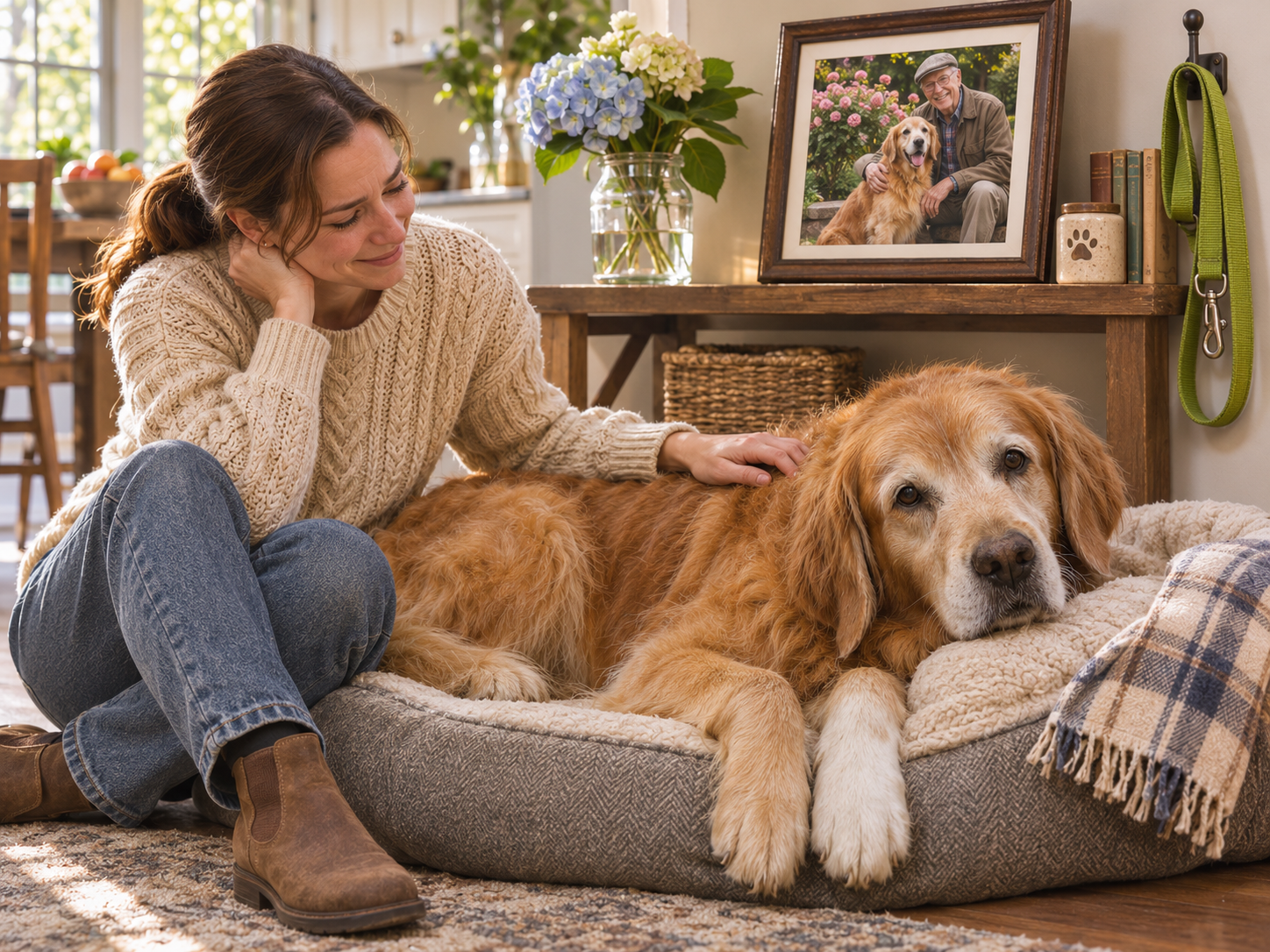
Image source: Openai(For illustrative purposes)
Three months later, Otis knew the route to Evelyn’s facility so well that he stood by the car door as soon as I picked up his green leash on Sunday mornings.
The staff kept a small container of biscuits at the front desk for him. Evelyn had moved into a brighter room, and her therapist was helping her plan for more independence. She had also met with an attorney and changed the arrangements for who could handle decisions about her property.
I never heard the outcome of every review involving Grant. I knew Evelyn was receiving independent support and no longer relying on him alone. That was enough for me to stop feeling I had to solve her whole life myself.
Some Sundays she told me stories about Otis when he was young. He had once eaten an entire loaf of bread, wrapper and all, without looking remotely sorry. He used to carry her gardening gloves around the yard and hide them under the porch steps.
Other Sundays, we sat quietly while Otis slept across our feet.
One afternoon, Evelyn handed me a photograph. It showed a younger Otis, golden fur shining in the sun, stretched out beside a patch of roses. Evelyn’s husband was sitting behind him, one hand resting on the dog’s back.
“I thought you should have this,” she said. “So you know the life he had before yours.”
I put it on the shelf above Otis’s bed.
The dog who’d barely raised his head at the shelter now waited by my door each evening, stuffed rabbit in his mouth. He still put his white paw in the water bowl.
People sometimes told me I was wonderful for adopting a dog nobody wanted.
I always corrected them.
Otis had been wanted very much. He had simply been taken from the person who wanted him.
The shelter’s call hadn’t been the end of his rescue. It was the moment we learned what rescuing him truly required: listening to the person who loved him first, telling the truth about what had happened, and making room for both of us in the life he still had ahead of him.