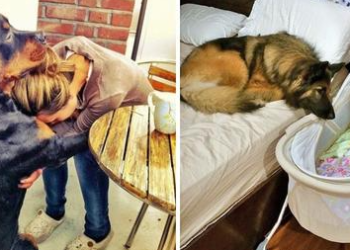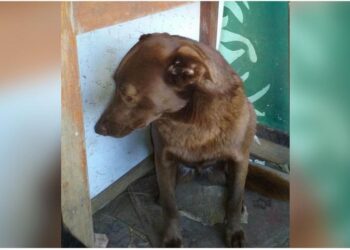

At first, nothing seemed dramatic.
The dog was not screaming in pain. He was not bleeding. He had not collapsed in the middle of the room. To anyone else, he may have just looked tired.
His owner noticed he was quieter than usual that morning. He didn’t run to the door like he normally did. He skipped his breakfast, walked slowly to his bed, and lay down with his head between his paws.
It was the kind of thing many dog owners might watch for a few hours.
Maybe he was tired.
Maybe he had eaten something weird.
Maybe he just needed rest.
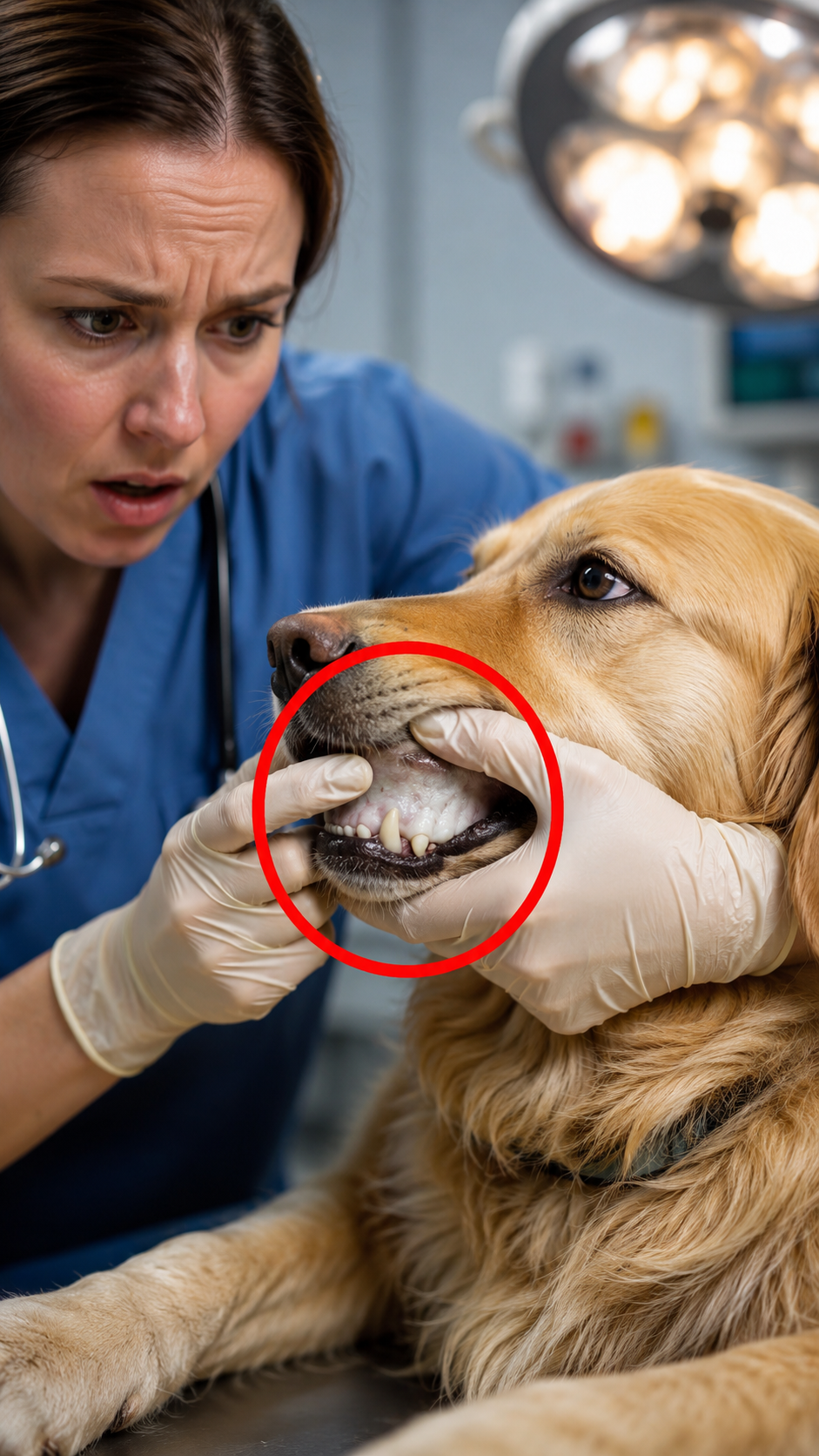
But when the vet looked at him, she didn’t focus first on his appetite, his energy, or even his stomach.
She lifted his lip.
That was enough.
One Small Sign Could Save Your Dog’s Life
Watch a short ad to unlock the full emergency warning guide, including the gum color check many dog owners miss.
Free access after ad completion
His gums were pale.
Not the healthy bubblegum pink most dogs should have. Not slightly light from sleeping. Pale. Almost white.
The vet immediately told the family to go to the emergency animal hospital.
And that is the part many dog owners do not realize: sometimes the scariest warning signs in dogs are not loud, messy, or obvious. Sometimes they are quiet. Sometimes they are hidden under the lip.
Why Gum Color Matters So Much
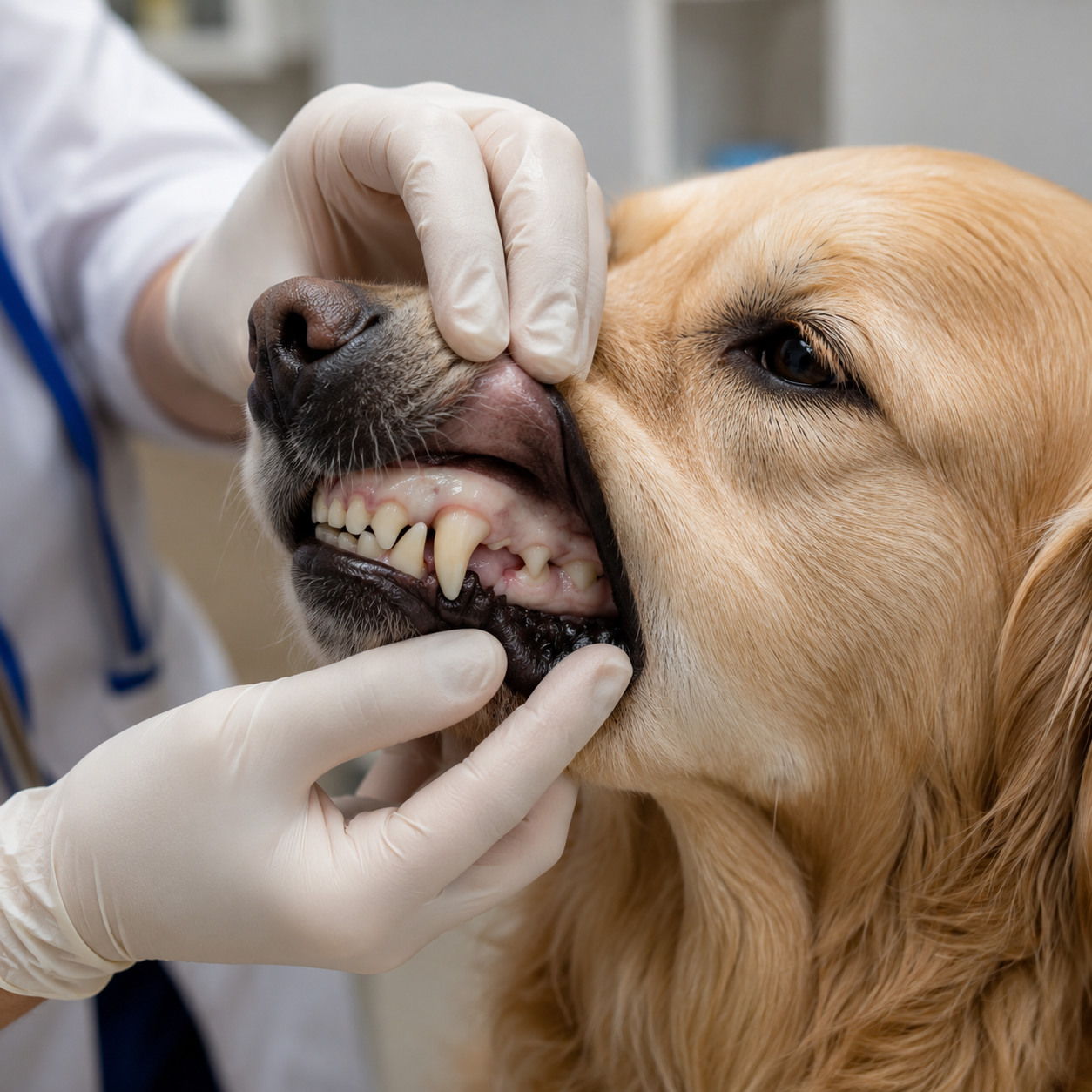
A dog’s gums can tell you a lot about what is happening inside the body.
Healthy gums are usually pink and moist. Some dogs naturally have black pigment on their gums, which can make this harder to check, but many still have at least one pink area you can use as a reference.
When a dog’s gums suddenly look pale, white, gray, blue, purple, yellow, or unusually bright red, it can be a sign that something serious is happening.
Pale or white gums are especially concerning because they can be linked to poor circulation, shock, blood loss, anemia, internal bleeding, or other conditions that need fast medical attention. PetMD notes that pale gums in dogs should be treated as a same-day veterinary emergency.
The danger is that pale gums often do not come alone. They may appear with weakness, heavy breathing, collapse, bloating, vomiting, confusion, or unusual tiredness.
But sometimes, gum color changes are one of the first signs an owner can actually see.
That is why vets pay attention to them so quickly.
The Small Check Every Dog Owner Should Know
You do not need to be a vet to notice when something looks wrong.
Here is a simple habit every dog owner should practice when their dog is healthy:
Gently lift your dog’s lip and look at the gum color. Notice what “normal” looks like for your dog.
Then gently press one finger on a pink area of the gum. The spot should briefly turn white, then return to pink quickly after you release pressure. This is called capillary refill time, and it gives a rough idea of circulation.
You are not trying to diagnose your dog at home. You are simply learning what is normal so you can recognize when something is not.
The mistake many owners make is waiting until an emergency to check for the first time. By then, they have no idea whether their dog’s gums are usually light, dark, patchy, or pink.
Knowing your dog’s normal can save precious time.
When Pale Gums Are an Emergency
Pale gums should not be ignored, especially if your dog also seems weak, restless, bloated, cold, confused, or unlike himself.
A dog with pale gums may be dealing with something that affects blood flow or oxygen delivery. That can become serious quickly.
Emergency vets often worry about possibilities like:
Internal bleeding
Shock
Severe anemia
Bloat or GDV
Heart problems
Trauma
Toxin exposure
Severe infection
Tick-borne disease
Breathing or oxygen problems
Some of these conditions can become life-threatening in minutes or hours.
This is why “wait and see” can be dangerous.
If your dog’s gums are pale or white and your dog seems off, call an emergency vet or go in right away.
The Other Sign Owners Often Miss: Bloat
One of the most dangerous situations where pale gums may appear is bloat, also known as GDV.
Bloat is not just a dog having gas. In serious cases, the stomach can fill with gas and twist, cutting off blood flow. This is a true emergency.
The scary part is that some dogs do not look extremely sick at first.
Early signs may include restlessness, pacing, drooling, trying to vomit but nothing comes out, a swollen or tight belly, weakness, or sudden discomfort.
As it gets worse, dogs may show pale gums, rapid breathing, weakness, or collapse. VCA lists a distended or bloated abdomen and serious breathing issues among emergency situations in dogs.
Large, deep-chested breeds are often considered higher risk, but any dog acting strangely after eating, especially with retching or abdominal swelling, deserves urgent attention.
If your dog is trying to vomit but cannot, pacing, drooling, and looking uncomfortable, do not wait for the belly to look huge.
Call an emergency vet.
“He’s Just Tired” Can Be a Dangerous Assumption
Dogs hide pain better than many people realize.
A dog who is suddenly quiet, withdrawn, or unwilling to move may not just be sleepy. He may be conserving energy because something is wrong.
This does not mean every lazy morning is an emergency. Dogs can have off days, just like people.
But the difference is pattern and combination.
One mild symptom by itself may be something to monitor.
Several symptoms together should make you act faster.
For example:
Tired but still eating, drinking, wagging, and acting mostly normal may be less urgent.
Tired plus pale gums, vomiting, bloating, heavy breathing, collapse, shaking, or weakness is different.
That is when the situation moves from “maybe he’s tired” to “something may be seriously wrong.”
Signs That Should Make You Call a Vet Immediately
There are certain symptoms dog owners should never casually watch for days.
Call a vet or emergency clinic immediately if your dog has:
Pale, white, blue, purple, gray, or yellow gums
Trouble breathing
Sudden collapse
Seizures
A swollen or painful belly
Repeated vomiting
Vomiting blood
Blood in stool or urine
Uncontrolled bleeding
Severe weakness
Inability to stand
Possible poisoning
Heatstroke signs
Sudden paralysis or loss of limb use
Inability to urinate
Extreme pain
A major fall, accident, or injury
The American Kennel Club advises calling a vet immediately for frequent vomiting or vomiting blood, and Cornell lists pale gums, respiratory distress, seizures, sudden collapse, bloated abdomen, significant trauma, and inability to urinate as urgent-care concerns.
The important thing is not to memorize every possible condition.
The important thing is to know when your dog’s body is giving you a warning that cannot wait.
The “Not Acting Right” Rule
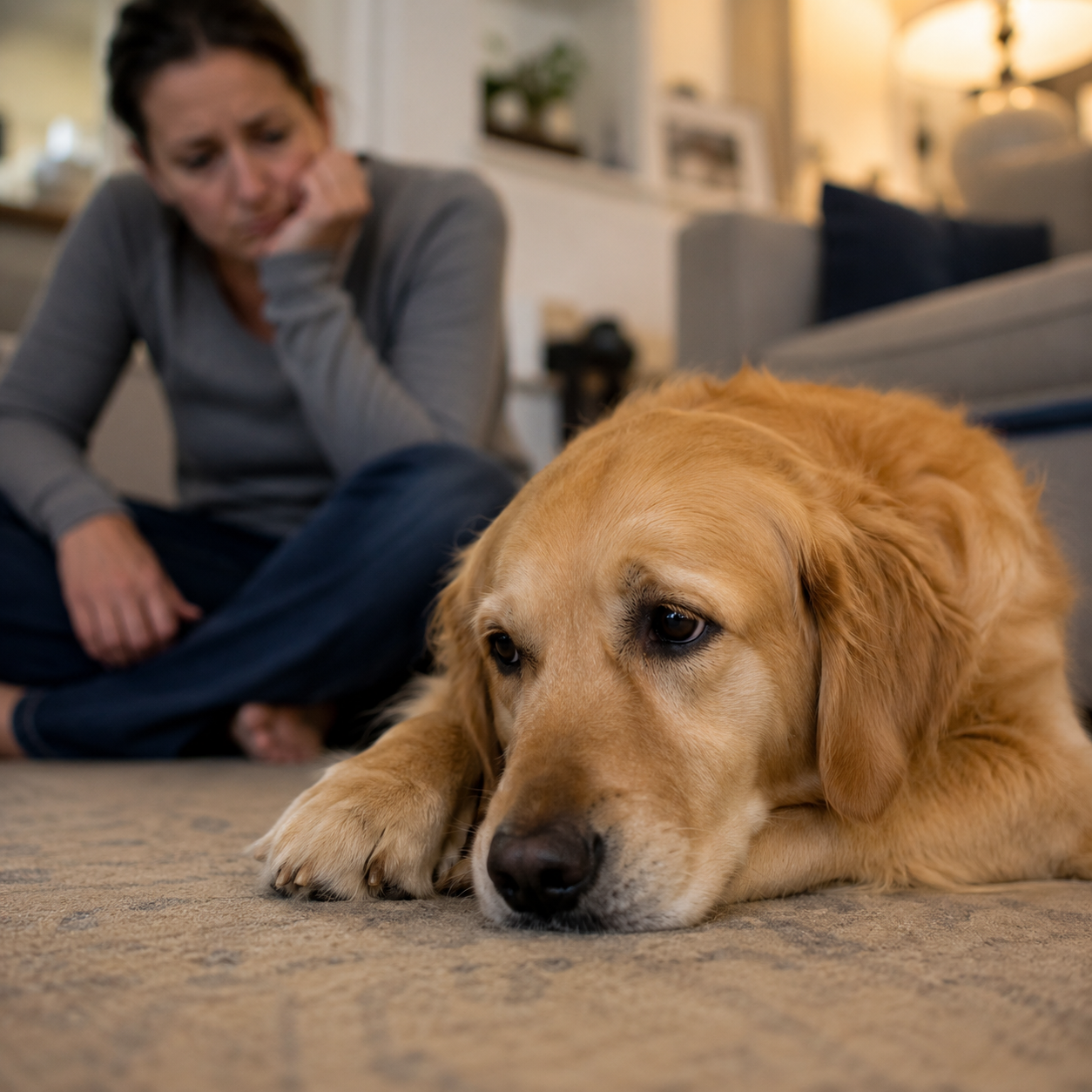
Many emergency cases start with the same sentence:
“He just wasn’t acting like himself.”
That phrase matters.
You know your dog’s normal behavior better than anyone. You know how he greets you, how fast he eats, how he sleeps, how he walks, how he looks when he wants attention, and how he behaves when something feels wrong.
A vet may know medicine, but you know your dog’s baseline.
If your dog suddenly seems deeply different, trust that instinct.
But do not stop at the feeling. Check the basics:
Look at the gums.
Watch the breathing.
Check for bloating.
Notice whether your dog can stand normally.
Look for vomiting, diarrhea, blood, or signs of pain.
Think about possible toxins, injuries, or things he may have eaten.
Then call the vet and describe exactly what you see.
A good emergency call is not, “My dog seems weird.”
It is:
“My dog is very weak, skipped food, his gums look pale, and he is breathing faster than usual.”
That gives the vet much more to work with.
What You Should Not Do at Home
When a dog may be seriously ill, the wrong home treatment can waste time or even make things worse.
Do not give human medication unless your vet specifically tells you to.
Do not force food or water into a weak or vomiting dog.
Do not try to make your dog vomit after possible poisoning unless a vet or poison-control professional tells you to.
Do not massage a swollen belly and hope it passes.
Do not wait overnight if your dog has pale gums, collapse, breathing trouble, or repeated vomiting.
The goal is not to panic.
The goal is to move quickly when the signs point to something serious.
Build a Simple Emergency Plan Before You Need It
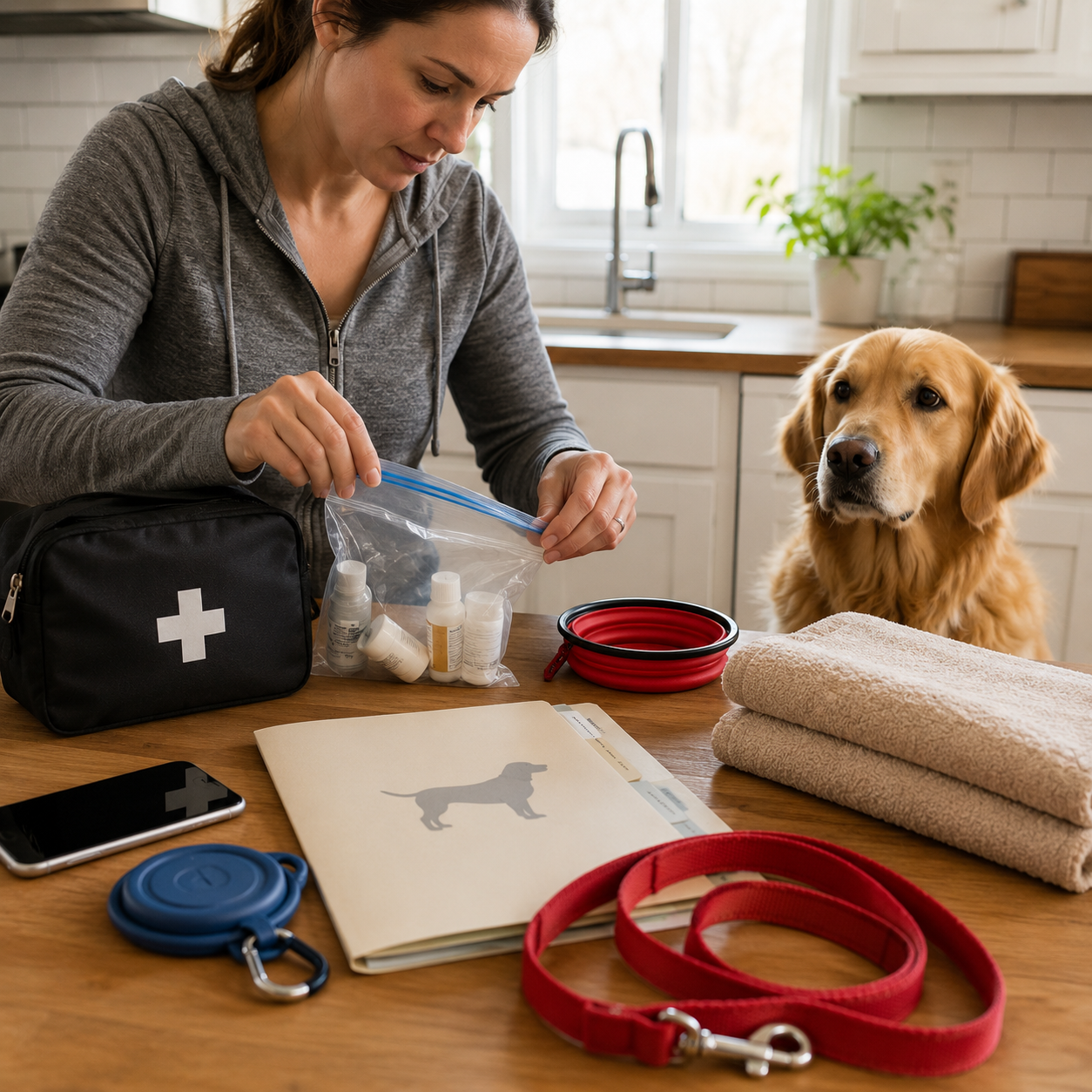
Most people think about emergency vets only when something is already wrong.
That is a mistake.
Every dog owner should have a small emergency plan ready:
Save the nearest 24-hour emergency vet number in your phone.
Know the fastest route there.
Keep your dog’s medical records and medication list accessible.
Know your dog’s normal gum color.
Know your dog’s normal resting behavior.
Keep recent photos of medication bottles, supplements, and foods your dog uses.
Have a carrier, leash, towel, and basic supplies ready.
In an emergency, people lose time searching for numbers, addresses, and records.
Prepare once, and you may save yourself panic later.
The Lesson From One Small Sign
The family in this story did not rush to the ER because their dog looked dramatic.
They rushed because the vet saw one small sign that suggested something could be wrong on the inside.
That is what makes dogs so difficult sometimes.
They cannot tell us, “I feel weak.”
They cannot say, “My stomach hurts.”
They cannot explain that they feel dizzy, cold, or short of breath.
So we have to notice the quiet signs.
A missed meal.
A strange posture.
A swollen belly.
A sudden change in breathing.
A dog who will not get up.
A gum color that does not look right.
Not every warning sign means disaster. But some signs are too important to ignore.
If your dog’s gums are pale, white, gray, blue, purple, or yellow, or if your dog seems weak, bloated, collapsed, or struggling to breathe, do not wait to see if it passes.
Call a vet.
Sometimes, the smallest sign is the one that tells you the most.